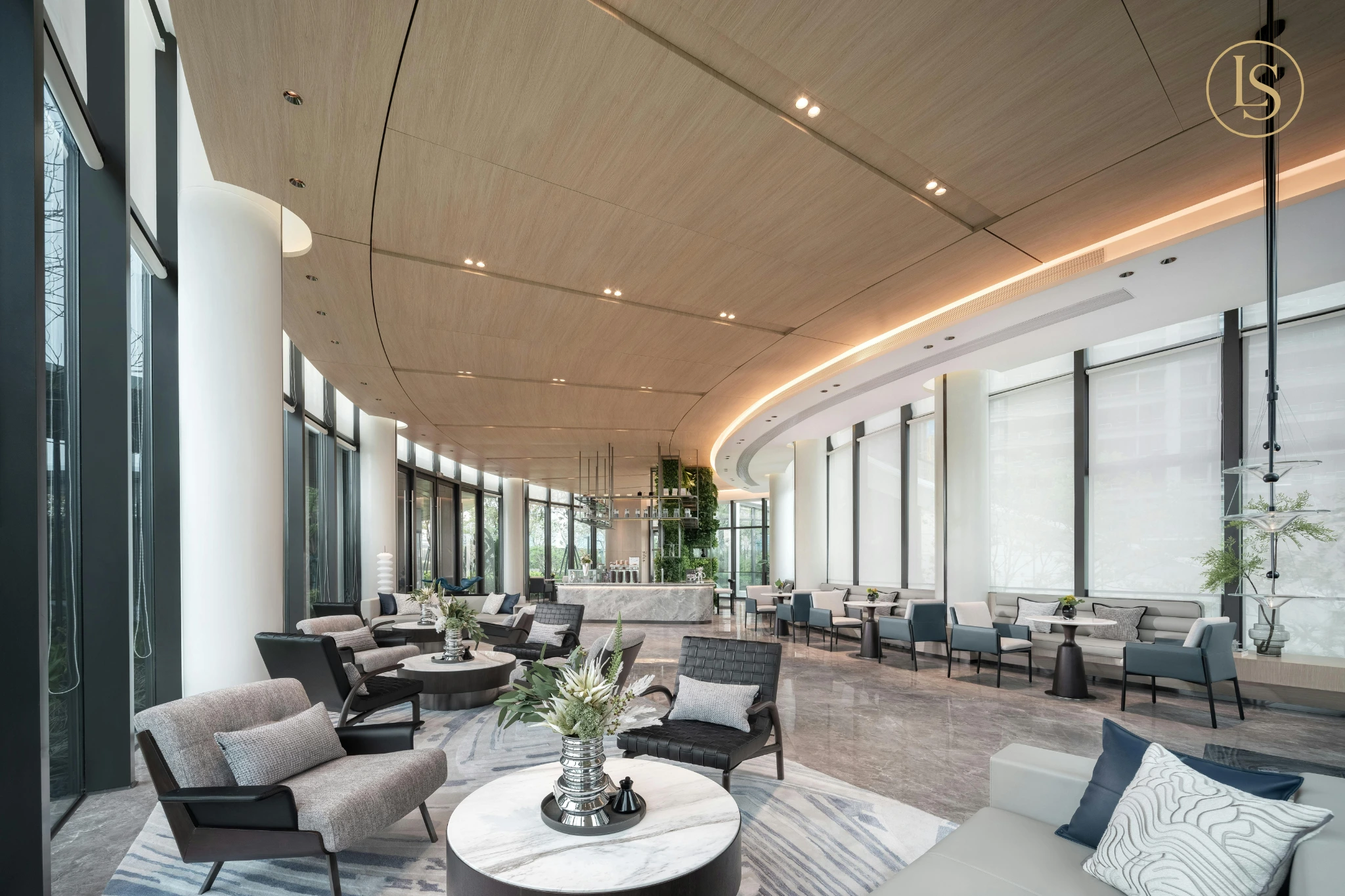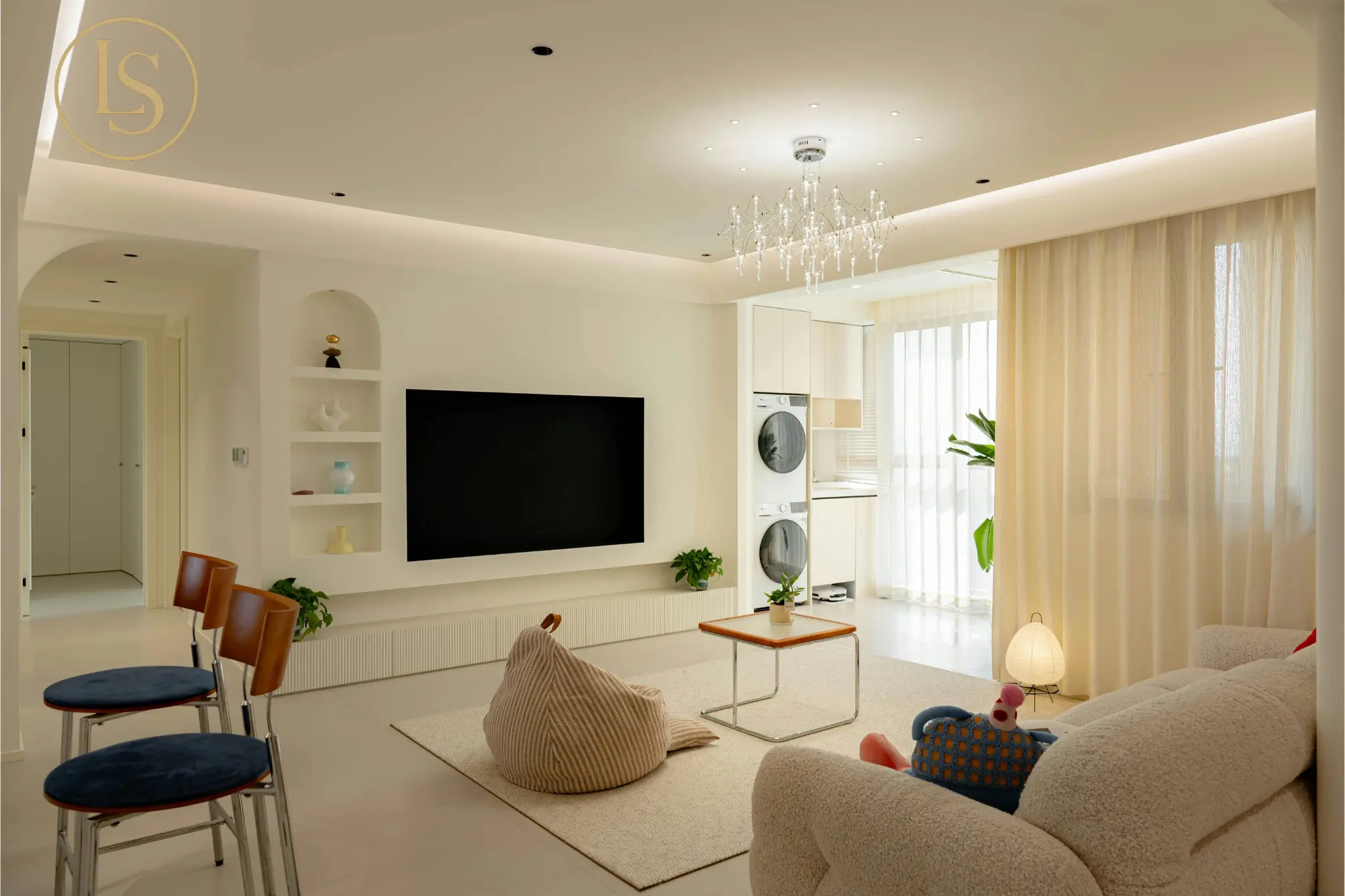
Walk into your living room right now and turn off every light except one. Look around. The room changes completely — different shadows, different mood, different energy. Now turn that one off and switch on a different lamp somewhere else. Same furniture. Same walls. Same art. Completely different room.
That shift you just felt is the entire reason designers obsess over lighting more than almost any other element in a home. Not because fixtures are exciting to shop for — but because light is the invisible hand that controls how every other design decision lands. The most beautiful sofa in the world looks flat under bad lighting. A simple room with thoughtful lighting feels like a place you never want to leave.
Here's how professionals actually think about it.
Why Most Rooms Feel "Off" (And It's Almost Always the Lighting)
You've been there. The living room that feels lifeless no matter how many pillows and throws you add. The kitchen that works fine during the day but feels cold and clinical after dark. The bedroom that has zero atmosphere once the sun goes down. The dining room where everyone looks slightly washed out, and nobody can figure out why.
These aren't furniture problems. They aren't paint problems. They're lighting problems hiding in plain sight.
Most homes have one light source per room — a single overhead fixture doing all the work. That's like trying to cook an entire meal with one ingredient. Technically possible. Never satisfying. When a room feels flat, dull, or vaguely unwelcoming despite looking "right" on paper, the missing piece is almost always lighting depth.
The Three Jobs Every Light in Your Home Should Be Doing
Forget the textbook labels for a moment. Instead, think about lighting as three distinct jobs — each one essential, each one doing something the others can't.
The Foundation — Light That Lets You Move Safely Through a Room
This is your ceiling layer. Recessed cans, flush mounts, overhead fixtures. Their job is simple: make sure you can walk through the room without tripping over the dog.
The problem is that most homes stop here. One overhead fixture, one switch, one setting. The result is what designers call the dentist-office effect — even, shadowless, bright, and completely devoid of warmth. Foundation lighting should always be on a dimmer. At full brightness during the day, dialed down to 30% in the evening. Never the only light on in the room.
The Workhorse — Light That Helps You Do Something Specific
Under-cabinet strips that illuminate your kitchen countertop. A reading lamp next to the chair where you actually read. A desk light positioned so your own hand doesn't cast a shadow on what you're writing.
Workhorse lighting is functional, but placement matters more than the fixture itself. A beautiful pendant over a kitchen island that hangs two inches too low blocks your sightline to the person across from you. A bedside lamp on the wrong side of the nightstand means you're reading in your own shadow every night. Position first, fixture second.
The Soul — Light That Makes You Feel Something
This is the layer that separates a professionally designed room from a well-furnished one. Table lamps that cast warm pools of light across a console. Sconces that wash a textured wall with soft shadow. A single art light above a painting that makes it glow after dark. LED strips tucked behind joinery or under floating shelves, creating depth you feel but can't quite identify.
Ninety percent of homeowners skip this layer entirely. They furnish a room, paint the walls, hang the art, and wonder why it still doesn't feel "finished." The soul layer is the answer. It's also, not coincidentally, the layer that makes a room feel expensive — because it signals that someone thought about how this space would feel at nine o'clock at night, not just at noon.
The Kelvin Secret Most Homeowners Get Wrong
Every light bulb has a color temperature measured in Kelvin. Lower numbers produce warm, golden light. Higher numbers produce cool, bluish light. This single specification has more impact on how your home feels than almost any fixture you choose — and most people never look at it once.
Here's what happens when you ignore it. You buy a warm-toned table lamp and a cool-toned recessed bulb for the same room. Individually, each looks fine. Together, they create a subtle visual tension — one corner of the room feels cozy while the other feels sterile. Your brain can't reconcile the two temperatures, so the whole room feels "off" without you being able to pinpoint why.
It's the lighting equivalent of wearing brown shoes with a black belt. Nothing is technically broken. Everything feels slightly wrong.
The rule is simple: pick one Kelvin temperature per room and stick with it across every fixture.
| Kelvin | Feels Like | Best For | Avoid In |
|---|---|---|---|
| 2200K | Candlelight, firelight | Dining room, bedroom accent lamps | Kitchen, bathroom |
| 2700K | Warm sunset glow | Living room, bedroom, hallways | Task-heavy work areas |
| 3000K | Bright warm morning | Kitchen, bathroom, home office | Bedrooms, relaxation spaces |
| 3500K | Cool neutral daylight | Closets, laundry room, garage | Any room where you unwind |
| 4000K+ | Fluorescent office | Commercial and retail spaces | Every single room in your home |
For most luxury homes, 2700K across living spaces and 3000K in the kitchen and bathrooms creates a consistent warmth that feels intentional from room to room. Go above 3500K anywhere in a residential setting and you're inviting an atmosphere that belongs in a hospital corridor.
How One Room Should Feel at Three Different Times of Day
This is how designers actually think about lighting — not as a fixed setup, but as a narrative that shifts throughout the day.
Take your living room.
Morning, 8 AM. Sunlight pours through the windows. The room doesn't need much help. Overhead recessed lights on a low dim — maybe 20% — just to balance the shadows in corners the sun doesn't reach. The space feels bright, open, awake. The lighting is barely noticeable because natural light is doing the heavy lifting.
Late afternoon, 5 PM. The sun has moved. The room is dimmer but not dark. This is when the middle layer activates. Table lamps on the console and side tables click on. Under-shelf LEDs begin to glow. The room transitions from a bright daytime space to something warmer and more gathered. You feel the shift without thinking about it — the room is inviting you to settle in.
Evening, 9 PM. The overhead is completely off. Only table lamps, sconces, and maybe one art light remain. The room contracts around you in the best possible way — intimate, warm, dimensional. Shadows appear where flat brightness used to be. The sofa feels cozier. The art on the wall has presence. This is soul lighting doing its job. This is the room at its most beautiful.
If your living room only has one mode — fully bright or completely dark — it's underlayered. A properly lit room doesn't have a setting. It has a rhythm.
Room-by-Room Lighting Cheat Sheet
Kitchen
Three layers minimum: recessed ceiling for general visibility, under-cabinet strips for prep zones, and a pendant or linear fixture over the island for visual warmth. Mistake to avoid: pendant fixtures that hang low enough to block eye contact across the island. Pro move: install a short LED strip inside glass-front upper cabinets. It costs under fifty dollars and makes the kitchen look like it belongs in an architectural magazine.
Living Room
You need at least five light sources. Most homes have two. Start with a pair of matching table lamps flanking the sofa — this single move anchors the room more than any other fixture. Add a floor lamp behind an accent chair. Add a sconce or art light on the focal wall. Dimmed recessed stays on as background fill. Mistake to avoid: one overhead fixture as the sole source. Pro move: place a lamp on a console table behind the sofa. It creates a glow that wraps the seating area in warmth.
Bedroom
Overhead on a dimmer for daytime utility. Bedside lamps or wall-mounted reading lights for nighttime function. One accent source — an LED strip behind the headboard, a small lamp on a dresser, or a single art light — for the moments between awake and asleep. Mistake to avoid: a harsh overhead as the only option after dark. Pro move: wall-mounted swing-arm sconces beside the bed. They free up nightstand surface, look cleaner, and direct light exactly where you need it for reading.
Bathroom
Vanity lighting belongs at face height — mounted on either side of the mirror, not above it. Overhead lighting aimed down at the vanity casts shadows under the eyes, the nose, and the chin, making everyone look exhausted regardless of how much sleep they got. Mistake to avoid: a single ceiling fixture as the primary vanity light. Pro move: a warm LED strip behind the mirror. It takes fifteen minutes to install and turns an ordinary bathroom into something that feels like a spa.
Five Lighting Mistakes That Make Expensive Rooms Look Cheap
Single-source overhead syndrome. One ceiling fixture carrying the entire room. The result is flat, even, shadowless illumination that makes a $200,000 renovation look like a rented apartment. One source means one dimension. Rooms need depth.
Mismatched Kelvin temperatures. A warm 2700K table lamp next to a cool 4000K recessed downlight. The contradiction is subtle but constant — your eye bounces between two competing atmospheres and never settles. Match everything in the room to the same temperature.
No dimmers anywhere. A room without dimmers has exactly two settings: interrogation or darkness. Dimmers cost a few dollars per switch and transform a fixed lighting installation into a flexible one. There is no good reason to skip them.
Pendants at the wrong height. Too high and the fixture feels disconnected from the surface below it, floating in no-man's-land. Too low and it blocks sightlines, bumps heads, and shrinks the perceived size of the room. Over a dining table, the bottom of the fixture should sit 30 to 34 inches above the table surface. Over a kitchen island, 28 to 32 inches.
Forgetting the vertical plane. Most homeowners light horizontal surfaces — tables, countertops, floors — and leave the walls completely dark. The result is a room that feels like a cave with spotlights. Walls are the largest surfaces in any room. Wash them with light — sconces, picture lights, uplighting, recessed cans aimed at the wall instead of straight down — and the entire space opens up.
Why Designers Plan Lighting Before Choosing a Single Piece of Furniture
This surprises most first-time clients. The lighting plan is one of the very first things a professional designer creates — long before a sofa is selected or a paint color is finalized.
The reason is infrastructure. Electrical placement has to be decided before walls are closed. The furniture layout determines where floor outlets and lamp positions need to be. Art lighting requires knowing what goes on which wall before installation crews arrive. And retrofitting lighting after construction is finished costs roughly ten times what it would have cost to plan it properly from the start.
At LUXbyLS Interior Spaces, lighting is treated as a foundational design element on every project — residential, commercial, and new construction. It's designed in Phase 1, built into the architectural plans, and refined all the way through installation. Because a beautifully furnished room with bad lighting is just an expensive room that doesn't feel right. And feeling right is the entire point.
Your Room Is Already Telling You What It Needs
Walk back into that living room. Notice where the shadows fall after sunset. Notice which corners disappear into darkness. Notice whether the room has one flat mode or whether the light shifts and breathes as the evening deepens.
Those observations are exactly where a designer starts. The room is already telling you what it needs — most people just haven't been taught how to listen.
If you're ready to transform how your home feels after dark, book a consultation with LUXbyLS Interior Spaces and let's build a lighting plan that brings every room to life.
Frequently Asked Questions About Interior Lighting Design
How many light sources does a room actually need?
A good minimum is three to five for most rooms, and larger living spaces often benefit from five to seven. The number matters less than the variety — you need sources at different heights (ceiling, eye level, table level) and serving different purposes (general, task, atmosphere). If you can stand in the center of a room and only see one light fixture, the room is underlayered.
Should all lights in a room be the same color temperature?
Yes — within each room, keep the Kelvin temperature consistent across every bulb and fixture. Mixing a warm 2700K lamp with a cool 4000K recessed light in the same space creates a subtle but constant visual conflict that makes the room feel disjointed. You can vary Kelvin between rooms — slightly warmer in bedrooms, slightly brighter in kitchens — but within a single room, consistency is essential.
Are LED lights good enough for luxury interiors?
Modern LEDs have completely closed the quality gap. High-CRI LED bulbs (CRI 90 or above) render colors as accurately as traditional incandescent lighting while lasting significantly longer and producing far less heat. The key is selecting the right Kelvin temperature and a high CRI rating — cheap LEDs with low CRI will make fabrics, skin tones, and paint colors look dull and slightly off. Invest in quality LEDs and you won't miss incandescent for a second.
How much does a professional lighting plan cost?
For a single room, most designers include lighting in their overall design fee. For a whole-home lighting plan on a new construction or major renovation, expect a dedicated lighting design to range from $1,500 to $5,000+ depending on the size and complexity of the project. This typically includes fixture specifications, electrical placement drawings, Kelvin and dimming recommendations, and coordination with the electrician. Considering that a bad lighting layout is one of the most expensive mistakes to fix after construction, the investment pays for itself many times over.